
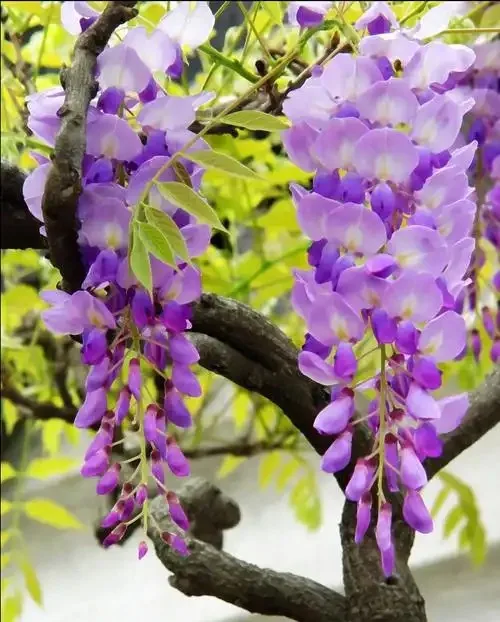
Hello, I’m Lily Harper. I’ve run a flower shop in Los Angeles for ten years called “Whispering Petals.” Every day, I work with soil, scissors, and all kinds of plants. Many people think running a flower shop is romantic, but more often than not, it’s a battle with the temperaments of plants. Some are well-behaved—just give them water and they thrive. Others are like stubborn children, never satisfied no matter how you care for them.
Lately, I’ve been spending a lot of time in my backyard. I wanted to figure out why some plants just won’t grow, while others can completely take over a fence. Last spring, I finally decided to plant some wisteria. I saw my neighbor’s porch adorned with cascading purple blooms, beautiful like a waterfall. I thought, “My life needs that kind of atmosphere.” But before planting it, I researched extensively. I didn’t want to give the wrong flower or plant the wrong species. Understanding the meaning of wisteria helped me better know this “new neighbor.”
What Does Wisteria Truly Symbolize?
Wisteria belongs to the legume family. It’s most famous for its cascading, fragrant clusters of flowers. Beyond its beauty, it holds deep significance across many cultures. Especially in East Asia, people have cultivated wisteria for centuries.
In the language of flowers, wisteria primarily represents these meanings:
- Longevity and Immortality: Wisteria lives exceptionally long. Some Japanese wisteria trees are over 1,200 years old. This enduring vitality makes it a symbol of endurance and eternal life.
- Love and Sensuality: The soft, cascading flowers are often seen as representing feminine grace. They also symbolize intoxicating, romantic love.
- Perseverance and Resilience: As a vigorous vine, wisteria symbolizes overcoming adversity and advancing steadfastly toward goals.
- Humility and Contemplation: In Buddhist tradition, the downward-hanging blossoms resemble heads bowed in prayer or meditation, representing humility and quiet reflection.
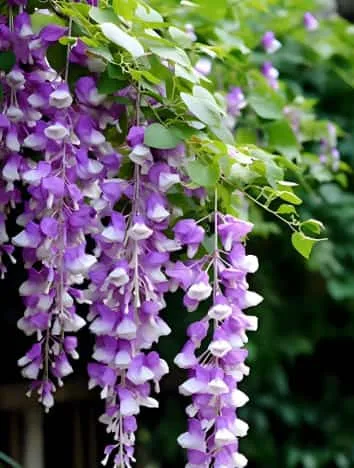
Eastern Tales and Western Perspectives.
In Japan, wisteria holds immense prestige. The powerful ancient Fujiwara clan—whose name literally means “Purple Wisteria Field”—demonstrates its longstanding association with nobility and high status. Traditional Kabuki theater features dances of the Wisteria Maiden, portraying unrequited love and exquisite beauty. Even today, wisteria patterns grace kimonos and family crests.
By the 19th century, wisteria had reached the West, where it acquired new meanings. In the Victorian era, receiving a sprig of wisteria signaled “I cling to you” or “Welcome.” This stems from the vine’s tendency to tightly entwine its supports as it grows.
Color Symbolism.
Different hues speak in distinct ways:
- Purple: Represents royalty, nobility, and wisdom.
- White: Symbolizes purity, innocence, and new beginnings.
- Pink: Signifies blossoming romance with a playful touch.
- Blue: Embodies tranquility, heralding auspicious new chapters.
Whether climbing garden trellises or painted in ancient ink wash art, wisteria bridges the material and spiritual realms. It reminds us to cultivate patience and maintain strength with grace. Whenever I share the meaning of wisteria flowers with guests, they’re often moved by its profound cultural depth.
My Blood, Sweat, and Tears Planting Story.
Let me share my own journey. My wisteria adventure began with a small sapling from a local nursery. I dug a hole twice the size of its root ball, tossed in some cheap compost, and then prayed it would survive.
The first year, it didn’t budge. I thought I’d bought a fake or been scammed by the seller. I watered it constantly, sometimes even grumbling at it, cursing its lack of vigor. Then the next year, it suddenly shot up like a rocket. Now, it grows about a meter taller every summer. I practically have to trim it with shears every week, or it would literally “eat” my drainage ditch.
The fragrance is the best reward.
Though wisteria is demanding—you must keep a constant eye on it lest it overrun your house—when those clusters of flowers cascade down, you feel it’s all worth it.
The best part of the garden isn’t just the sight. The fragrance is simply incredible. It’s strong and sweet, especially at night. When I finish a busy day at the flower shop and sit on the patio with a beer, that scent hits me. All the office stress, the frustration of pruning until my fingers ache—it all vanishes instantly.
This is a plant that demands respect. Give it a sturdy place to climb, and every spring it puts on a grand show. It taught me that beautiful things often require time and patience to unfold.
Honestly, watching these flowers sway in the breeze, I truly understand that the seemingly stubborn persistence in life eventually transforms into the most beautiful scenery.
