
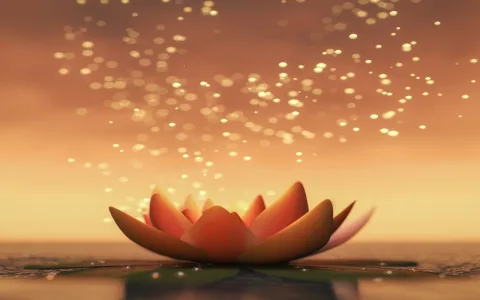
Have you ever seen a lotus flower?
In Buddhism, the lotus flower is one of the most important spiritual symbols, representing purity, enlightenment, and liberation from samsara.
It’s the kind that grows in muddy water, yet blooms pure and beautiful. I’ve always found this utterly magical. Not only is it stunning, but it seems to hold some profound secret. Especially in Buddhism—you see it everywhere. Buddha statues sit upon them, bodhisattvas hold them in their hands, and even mantras recite its name.
Why is that? What does it truly represent? I used to just think, “Oh, it’s a good thing,” but lately I’ve really wanted to understand. So I did some research, talked to people, and looked at a lot of materials. Hey, what I discovered was truly eye-opening!
“Purity” Blooming from Filth.
Let’s start with the simplest principle.
The lotus grows in water—specifically in filthy, stinking mud pits. Yet strangely, not a single drop of dirty water clings to its leaves or petals. When rain falls, the droplets simply roll off, leaving the leaves as green and the flowers as white as ever.
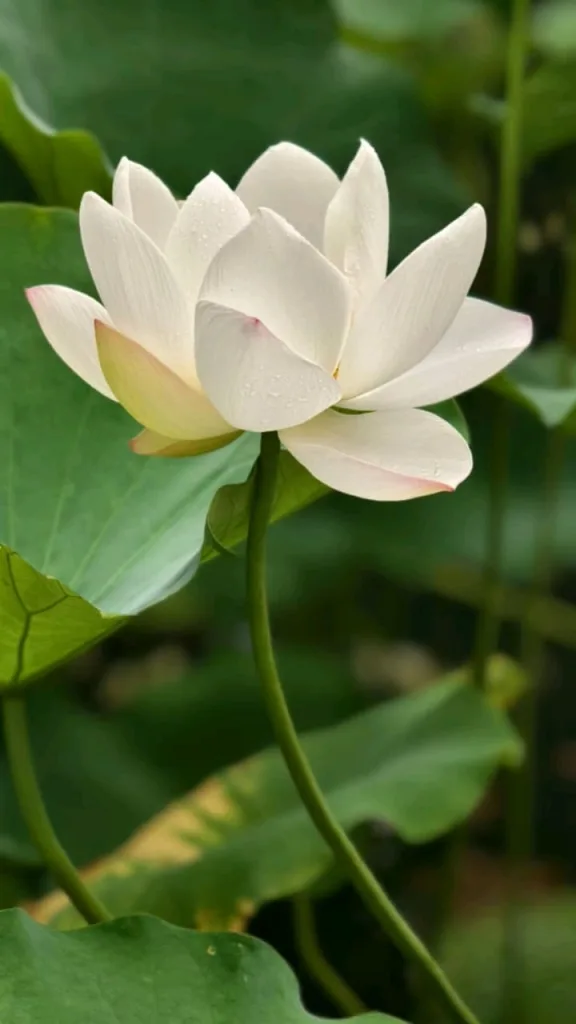
Doesn’t this resemble our own lives?
Each of us lives in this world, facing daily troubles, negative emotions, and countless desires. These are like that muddy swamp. Buddhism calls this “samsara”—meaning we spin endlessly in our afflictions.
In Mahayana Buddhism, the lotus is frequently mentioned in scriptures such as the Lotus Sutra (Saddharma Puṇḍarīka Sūtra), where it symbolizes the possibility of awakening even within worldly suffering.
But the lotus teaches us: You can live in the mud without becoming mud.
Those who practice cultivation must learn from the lotus. You can have goals in your heart, but don’t let all that messy stuff pollute you. Keep your inner world clean—that’s what “purity” and “non-attachment” mean. Simple, right?
How Far Has Your “Flower” Bloomed?
A lotus doesn’t bloom all at once. It has a process.
- Bud: Tightly closed, its inner beauty hidden. This mirrors our initial encounter with the Dharma or first steps toward self-improvement. Ideas exist within, but potential remains untapped.
- Half-Open Flower: Petals gradually unfurl, revealing glimpses of the pistil. This signifies you’re already on the path! You begin to study, to practice, improving a little each day.
- Fully bloomed flower: Wow! The entire flower unfurls, radiant and brilliant. In Buddhism, this represents “attaining Buddhahood”—complete enlightenment, a full understanding of the truth of the universe and life.
So next time you see a lotus, ask yourself: What stage is my “flower” at? Is it just sprouting, or about to bloom? It’s a thought-provoking question.
Different Colors, Different “Mental Practices”.
Did you know? Lotus flowers aren’t just white—they also come in pink, red, blue, and even yellow. Each color speaks to a distinct “mental practice.”
- White Lotus: The purest and most pristine. It represents a heart as white as snow, free from any impure thoughts. Often used to describe the Buddha himself.
- Pink Lotus: The most noble. Historically, Shakyamuni Buddha is associated with this flower. It embodies both the purity of white and the passion of red, achieving perfect balance.
- Red Lotus: Powerful just by its name! It represents “love” and “compassion.” Not petty affection, but universal love for all beings. Guanyin Bodhisattva is often depicted with a red lotus.
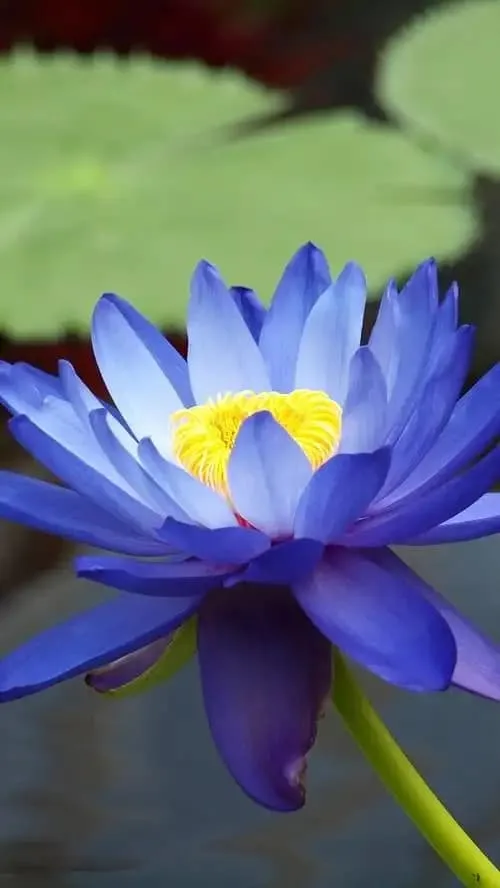
- Blue Lotus: The most intriguing. It’s often depicted as not yet fully bloomed. Why? Because it represents “wisdom.” True wisdom is something you can never fully master. The more you learn, the more you realize how little you know, so the pursuit must continue endlessly.
You see, even the colors alone hold so much depth. This isn’t a random choice; each color quietly imparts a profound teaching about spiritual practice.
The Lotus Is Not Just a Flower—It Is the Entire Universe.
Ultimately, the lotus’s significance extends even further.
In Tibetan Buddhism, lotus imagery is also strongly connected with Padmasambhava, known as the “Lotus-Born Master,” while in East Asian Buddhism, the lotus is closely linked to Amitabha and Pure Land teachings.
Why do Buddhas and Bodhisattvas always sit upon lotus thrones? Because this signifies that though born into this world (the mud), they have transcended it (the flower blooms above the water). Their status is sacred, yet their hearts remain with us.
Then there’s that famous mantra: “Om Mani Padme Hum.” Translated, it means “The Jewel in the Lotus.” Here, the ‘jewel’ represents our ultimate goal—enlightenment. The “lotus” symbolizes the path to that goal—emerging from life’s muddy waters through wisdom and compassion.
Goodness, who would have thought a single flower could hold the entire blueprint of spiritual practice!
Conclusion: Seeing More Than Just a Flower.
Before, when I saw a lotus, I’d only say, “Wow, how beautiful!”
Now, when I see it, I think: “Ah, this is a story—a story about finding order in chaos, about moving from darkness toward light.”
It is no longer just a plant, but a living example. It tells me: no matter how dire your circumstances, you possess the power to become beautiful, pure, and filled with wisdom.
This, perhaps, is why the lotus became Buddhism’s most significant symbol. It speaks not a word, yet conveys the most profound truths to us all.
Recommended reading: Lotus Flower Meaning: Growth, Purity, and the Power of Rising Above Life’s Struggles

One thought on “Lotus Flower Meaning in Buddhism: Symbolism of Purity and Enlightenment”