
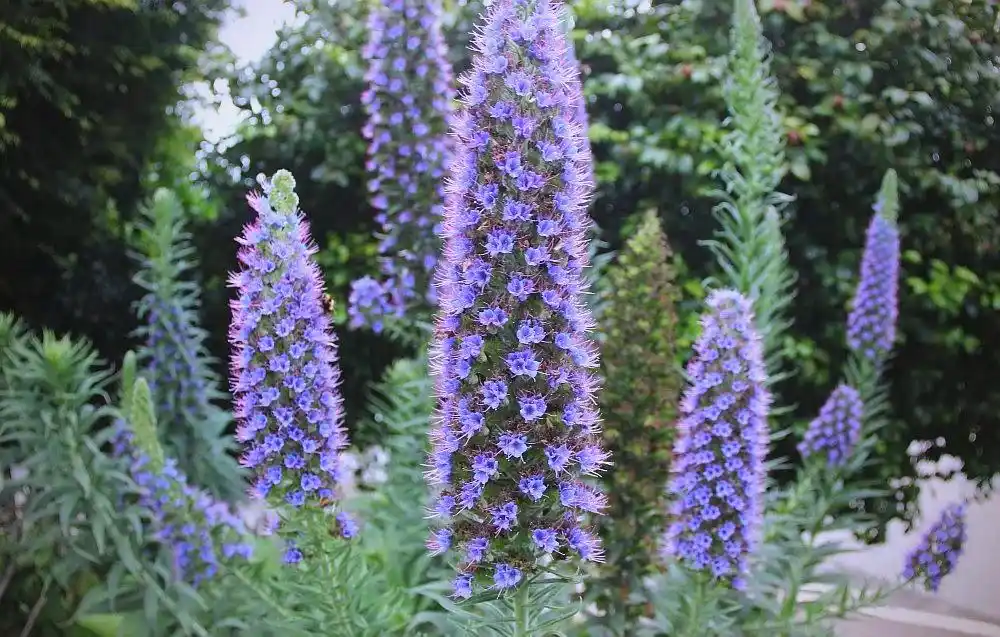
Have you ever had this experience? At first, you find something really annoying, but then you gradually grow to like it? That’s exactly how I feel about the blue thistle flower.
Back then, I’d frown whenever I saw blue thistle flowers. Why? Because they’re covered in thorns! When hiking or walking, if you weren’t careful, their prickles would pierce through your socks—or even your skin—leaving you sore and itchy. To me, they were just unwelcome weeds I wanted to avoid at all costs.
But then, things changed.
A Chance “Heart Flutter”
That day, the sunlight was perfect. I was walking with my head down when a deep blue flash suddenly caught my eye. I looked up and saw that “nuisance” had bloomed! Its flower wasn’t just ordinary blue, but a deep, tranquil blue-purple. It resembled a tiny, fuzzy ball, standing out vividly against the sea of green.
I couldn’t resist pulling out my phone to take pictures. Shot after shot, I still couldn’t get enough. That’s when a question popped into my mind: Could such a beautiful flower really be just a useless weed? Was there a story behind it?
What Does It Really Symbolize?
With this question in mind, I started researching. The results stunned me! It turns out this thorny flower is a “big star” in many places.
It symbolizes “defense.” This makes perfect sense—after all, it’s covered in thorns! The most famous example is Scotland. Did you know? The blue thistle is Scotland’s national flower! Legend has it that long ago, enemies planned a nighttime ambush on Scottish troops. A barefoot soldier stepped on a blue thistle, cried out in pain, and gave away their position, saving the Scots. From then on, the blue thistle became a symbol of bravery and defending one’s homeland.
It represents “resilience.” The blue thistle flower possesses extraordinary vitality. It thrives where others cannot—in rocky crevices, parched soil, neglected roadsides—and still produces such beautiful blooms. Isn’t this the ultimate proof of “beauty in adversity”?
It also carries a touch of nobility. In ancient heraldry and folklore, the blue thistle flower is often linked to honor and nobility. Though it grows wild and appears rugged, people have bestowed upon it a high status. Isn’t that fascinating?
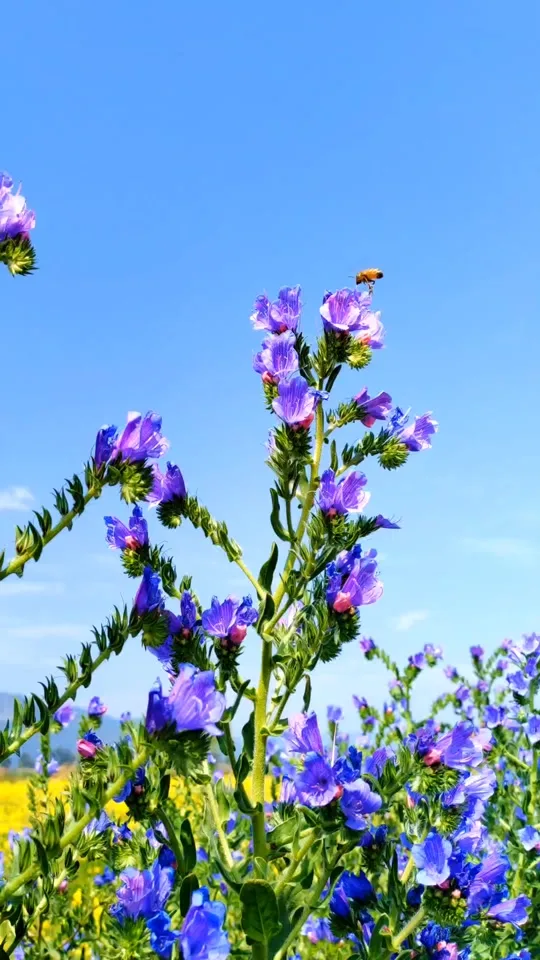
In flower symbolism, blue thistle meaning often relates to protection, strength, and independence.
Oh, and one more thing that fascinates me: it embodies both “pain” and “cure.” Its thorns inflict pain, yet its roots and leaves were historically used as medicinal herbs. Much like life itself, sometimes painful experiences can make us stronger and wiser.
What does it look like? Where can you find it?
When we say “blue thistle flower,” we’re usually referring to two plants: one is the cotton thistle, and the other is the blue globe thistle (scientific name Echinops ritro)[[10]]. Especially the blue globe thistle—its flower is a perfect, deep blue little sphere that looks like something straight out of a sci-fi movie, super cool!
What kind of places do they like?
- Plenty of sunlight: They dislike dark, damp spots and love basking in the sun.
- Dry soil: Overly fertile or wet areas are unsuitable for them. Hillsides, crevices between rocks, and dry grasslands are their true homes.
- Found Worldwide: Their striking beauty makes them popular garden additions, attracting bees and butterflies.
My Reflection
Now, whenever I see a deep blue thistle flower, my feelings are entirely different.
I no longer see only its thorns, but its beauty, its strength, its story. It made me rethink how quickly I judge things. What appears hard and prickly on the outside may hide the gentlest, most steadfast soul within.
Moreover, it made me reflect on myself. In life, don’t we all need a bit of that “blue thistle spirit”? Sometimes you need to set boundaries, and sometimes you just need to show up and grow.
Honestly, who would’ve thought that the “prickly little thing” I once disliked would become my “life mentor”? I guess nature still has a few surprises left for me.
