
I’ve been tinkering with my backyard garden for years. Some survived beautifully. Others barely lasted a month before collapsing in the summer heat.
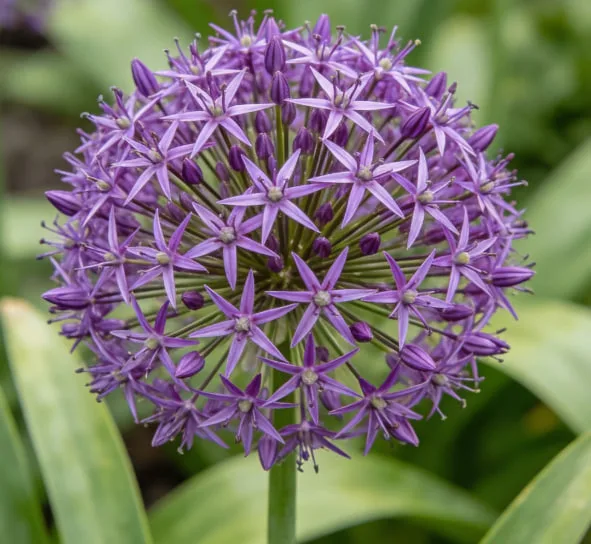
A few seasons ago, I stumbled upon a plant called Allium. You might have spotted them along roadsides or in other people’s gardens. Their tall, slender stems crowned with massive purple fluffy balls look like something straight out of a fairy tale. At first, I just thought they were cool and unique-looking. After planting around fifty bulbs one autumn, I honestly didn’t expect much. But the following spring, they came up all at once.
The Allium genus is actually a large family. Garlic, onions, and chives—all staples in our kitchens—belong to this family. They’re not just kitchen essentials but also garden stars. These round, bulbous flowers carry a long history and hide many interesting meanings.
The Secrets Garlic Chives Want to Tell Us.
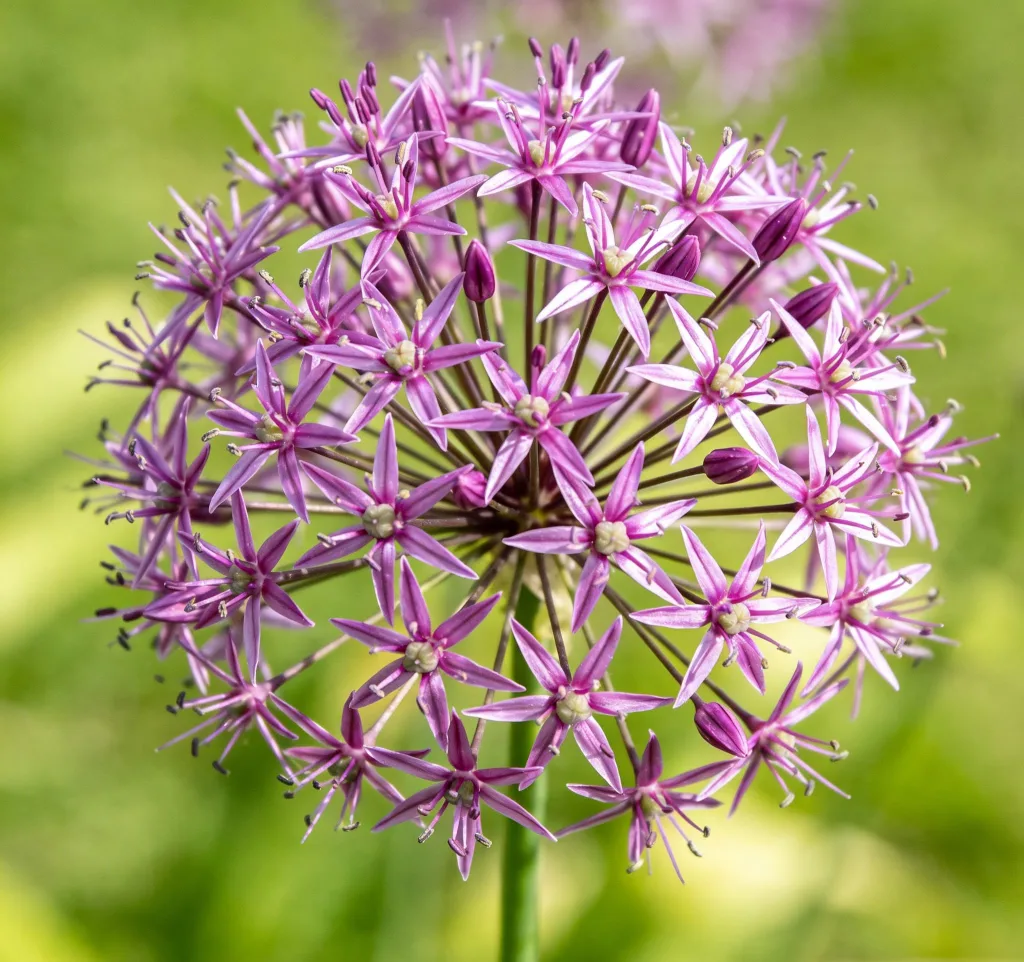
In the modern language of flowers, garlic chives primarily symbolize unity, patience, and good fortune. Take a closer look at their form: that large, round head is actually composed of hundreds of tiny flowers tightly clustered together. When you really look at it, you realize it’s not one flower — it’s hundreds working together.
We can simply understand the meaning of allium flowers like this:
- The Power of Unity: That perfect sphere symbolizes how many small parts must come together to form a beautiful whole.
- The Reward of Patience: Onion flowers grow slowly from underground bulbs. They need time to develop tall, sturdy stems. That’s probably why people associate them with long-term effort and quiet persistence.
- Safeguarding Peace: Historically, as part of the onion family, scallions possess a distinctive pungent aroma. Ancient people believed this scent could ward off misfortune and protect against illness.
- Future Prosperity: In certain cultures, a single flower head can yield an abundance of seeds. For some people, that abundance naturally became a symbol of prosperity.
Sometimes, understanding allium flower meaning can make gifting flowers more meaningful. When you present a friend with a bunch of chives, you’re not just offering a beautiful bloom—you’re wishing them a circle of supportive friends and a patient spirit.
Ancient Tales Across Time.
People have been growing and valuing onions for thousands of years. People back then appreciated both their visual appeal and their practical value.
In ancient Egypt, the onion’s spherical shape and concentric rings were seen as symbols of eternity and the cosmos. You can spot onion motifs in some ancient tomb paintings. Archaeologists have even found onions placed inside tombs.
By the Victorian era, people often used flowers to convey secret messages—a practice known as “the language of flowers.” While onions were considered beautiful, their kinship with garlic gave them a “stinky rose” reputation. Thus, gifting onions sometimes expressed humility or a wish to ward off misfortune.
Journey from Field to Garden.
Hyacinths primarily thrive in the Northern Hemisphere. While the purple variety is most familiar, this family actually boasts over 750 distinct members. Their colors are remarkably diverse—ranging from deep blue and violet to crisp white and sun-like yellow.
Hyacinths truly became garden stars around the 19th century.
At that time, adventurous botanists brought rare varieties from Central Asia back to Europe. From then on, they found a home in botanical gardens. Today’s landscape designers particularly favor alliums for their architecturally striking forms. Moreover, They bloom right after tulips fade, just when the garden starts looking a little empty. bridging that otherwise empty period in the garden.
A Gardener’s Trusted Ally.
Beyond their beauty, chives offer practical value to gardeners. With growing environmental awareness, many cultivate plants to support nature. Chives are beloved by bees and butterflies, their small flowers rich in nectar that attracts these pollinators.
Deer usually leave them alone, probably because of the smell. This means planting chives in your garden acts like having bodyguards, protecting delicate plants nearby from being eaten by animals.
Ultimately, chives serve as a bridge connecting early spring to midsummer. When other garden flowers haven’t bloomed yet or have already faded, chives always stand tall. They require minimal care and possess remarkable resilience. Snip a few stems to place in a kitchen vase—they look absolutely splendid.
On quiet evenings, I sometimes just sit and watch them move in the wind.
If you have a small patch of land and are tired of delicate plants that wilt at the first hint of sun, consider planting some chives. Just bury them in the soil and leave the rest to time. Over the years, they’ve never let me down. If you’re looking for a plant that’s both beautiful and easy to care for, while also carrying a positive meaning, chives are definitely a great choice.
Maybe that’s the real reason I like them so much.
