
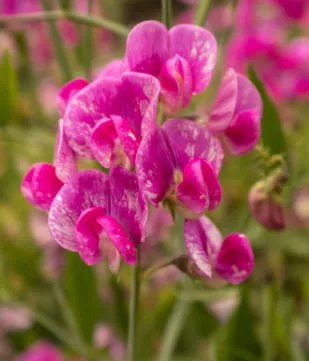
I spent the entire morning working in the backyard today. My hands were covered in thick, dark soil, all for planting a new batch of sweet peas. Watching these tiny vines climb up the trellis filled me with deep emotion. They’ve truly changed my perspective on gardening.
Many friends often ask me, why am I so obsessed with these flowers every spring? Is it just the scent? True, that fragrance hits you like someone spilled a barrel of perfume. But it’s more than just the smell. Each petal holds countless fascinating stories. After planting, I brewed myself a cup of coffee and flipped through my years of gardening notes. I discovered that the history of this flower is full of strange and fascinating details that most people overlook.
Sweet peas are more than just a pretty sight. They are plants that engage all your senses. For centuries, they have held a special place in floral history. This annual climbing plant, with its crinkled petals and honey-sweet scent, is the very soul of the English cottage garden.
The History of Sweet Pea Flowers: From Sicily to the World
Let’s talk about its origins. The sweet pea’s story traces back to the late 17th century. That’s when a Sicilian monk named Francesco Cuppani made a significant move. In 1699, he brought the first seeds from Italy to England.
Initially, the wild sweet pea had small, unremarkable flowers in a brownish-purple hue. Yet, their fragrance was intensely sweet, laying the foundation for their later popularity. Fast forward to the late 19th century, when Henry Ecford, a Scottish nurseryman, entered the scene. A true genius, he dedicated himself to cross-breeding these plants. The result was the “large-flowered” varieties we admire today—larger blooms with more vibrant colors. It was then that the “sweet pea craze” truly took hold.
Sweet Pea Flower Meaning and Symbolism
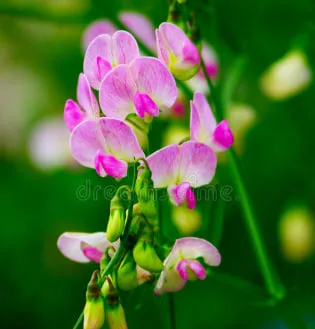
In the world of flowers, each bloom speaks its own language. This is what we commonly refer to as the language of sweet peas. During the Victorian era, people often used flowers to express sentiments too delicate to voice aloud. Back then, sweet peas symbolized a delicate and fleeting joy.
These flowers bloom beautifully but have a short season. This gave them a special meaning: savoring happiness in the moment. They were also traditionally known as “flowers of farewell.” People often gave them to express gratitude or to say goodbye gracefully. If you received a bouquet of sweet peas, the sender might be saying, “Thank you for the wonderful time.”
Specifically, its meanings can be broken down as follows:
- Deep Gratitude: Often given as a gift to hosts to thank them for their warm hospitality.
- Pure Youth: Its soft hues and delicate form evoke the innocence of youthful days.
- Symbol of April: As the birth flower for those born in April, it embodies spring’s freshest essence.
When I reflect on the sweet pea’s symbolism, what moves me most is its attitude of “cherishing the moment.” Life is short, just like its bloom.
Why Sweet Pea Flowers Are So Popular in Gardens
Why has the sweet pea endured for centuries? Because it’s extraordinary. Its beauty and functionality blend flawlessly.
First, its fragrance is unmatched. Few flowers rival its complex scent—a blend of honey, jasmine, and orange blossom. A single bouquet fills the entire room with its aroma.
Second, its colors dazzle the eye. From soft pinks and creamy hues to deep bicolors and vibrant magentas, few flowers in horticulture boast such a rich palette.
Third, it reigns supreme as a cut flower. The more you harvest it, the more vigorously it blooms—a boon for home gardeners. Each summer day brings fresh stems to arrange in vases, keeping your home perpetually vibrant.
Fourth, it creates a romantic atmosphere. Its petals are as light as wings, and its tendrils twist and curl. Whether at a wedding venue or a rustic cottage, its presence instantly adds a touch of dreaminess and romance.
Sometimes I wonder: why do we grow flowers and plants? Perhaps it’s for that fleeting moment when we catch a familiar scent, recalling a summer, a person, or a feeling.
Honestly, watching these blooms sway in the breeze, I can’t help but marvel: The most beautiful things are often the most fragile and fleeting—yet precisely why they deserve our utmost care.
