
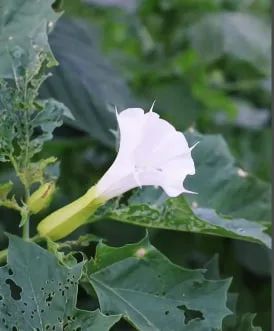
Last weekend, I dug out my long-forgotten sketchbook. I also picked up a few old books at the flea market. Flipping through the yellowed pages, I kept seeing a familiar pattern—the Mandala flower. At first, I just thought it was beautiful. Like a kaleidoscope, it was mesmerizing. But later, I couldn’t help wondering: Why do so many people love to draw it?
This isn’t just a pretty pattern people like to draw. It’s a symbol that tries to make sense of the universe in a visual way.
Ancient circles hold profound wisdom.
The word “mandala” comes from ancient Sanskrit, meaning “circle.” In Hinduism and Buddhism, it represents the entire cosmos. It also symbolizes the state of enlightenment. Look at that perfect circle—doesn’t it remind you of the cycle of life? No beginning, no end. Everything is interconnected.
Monks of old would spend days creating exquisite sand mandalas using colorful grains. Once complete, they would erase it without hesitation. This act teaches us: everything passes. Life is like this—coming and going, going and coming.
The secret of the lotus lies within its petals.
Many mandala designs are modeled after the lotus flower. The lotus is extraordinary. It grows from muddy waters yet blooms into the purest, most beautiful flower.
What’s interesting is what people read into this symbol.
- Purity: Even amidst the mud, the heart remains untouched by impurity.
- Awakening: As the petals unfold layer by layer, it mirrors our inner selves gradually opening up.
- Resilience: No matter how harsh the environment, nothing can stop its upward growth.
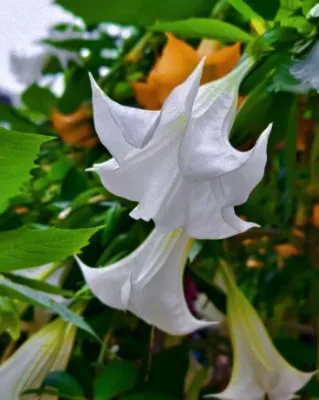
The beauty in mathematics is also peace within the heart.
Have you noticed how mandala patterns are remarkably symmetrical? Exceptionally harmonious? That’s because they follow nature’s laws, like the golden ratio. For some reason, looking at these patterns just feels calming. One glance, and our hearts settle. That’s why ancient sages used them for meditation and contemplation. In a chaotic world, they offer an island of tranquility.
Western psychologists cherish them too.
In the 20th century, psychologist Carl Jung introduced mandalas to the West. He discovered that when people feel disoriented, drawing a mandala helps them reconnect with their center. To him, creating a mandala was like painting one’s inner world—a form of healing and self-integration.
Circles Around the Globe.
It’s not just Asia—people worldwide use circles to express what matters most.
European Celts wove intricate knots into circles, symbolizing eternal life. Native Americans created “medicine wheels”—circles of stones used for healing and connecting heaven and earth. Even ancient cathedrals feature massive rose windows, where stained glass forms symmetrical circles that inspire awe at first glance.
By now, you probably understand. The mandala’s language isn’t about the flower itself, but a feeling. A feeling of wholeness, of healing.
Why Do We All Need It?
Life is too noisy. Too much information, too fast a pace. Our hearts are always drifting, unable to find a place to settle.
This is where the mandala becomes a remedy. It doesn’t demand deep understanding. Simply gaze at it, or pick up a pen and sketch a circle. Start from the center, drawing concentric rings outward. This process itself is a form of practice.
Honestly, sometimes I feel like just a few minutes of quiet drawing is more effective than ten cups of coffee!
It reminds us that everything has a core. As long as you hold onto that point, no matter how chaotic the outside world becomes, you won’t lose your way. The language of the mandala flower essentially tells us: Even when everything feels messy, it helps you slow down and focus on what matters to you.
Whether in temples a thousand years ago or at our desks today, this flower has always been guiding us.
